Laguna Torre
Laguna Torre is one of the most significant geographical points within Los Glaciares National Park. Located in the heart of El Chaltén, this natural formation serves as the final destination of a route that crosses the transition between the Andean forest and high-mountain terrain. Its importance lies not only in its physical composition but in being the receptacle of glacial sediments and ice fragments shed by the walls of the Cerro Torre massif.
The valley route
The trail to the lagoon runs along a path that departs from the outskirts of El Chaltén. Two trailheads exist barely five minutes apart, allowing for a quick convergence onto a single track. The walk begins under the shade of native forests of lenga beech and ñire, where the terrain starts with a gentle gradient before soon joining the course of the Fitz Roy river.
As the trail advances, the landscape transforms. The route follows the morphology of the valley, ascending along the riverbed and passing points of interest such as Mirador Margarita and Mirador del Torre. The latter sits roughly halfway to the lagoon, offering a detailed perspective of the Adela range and the granite spires that define the silhouette of the area. The presence of rock flour in the waters of the glacial lakes is a distinctive feature that marks the visual identity of this environment.
Glacial landscape and geology
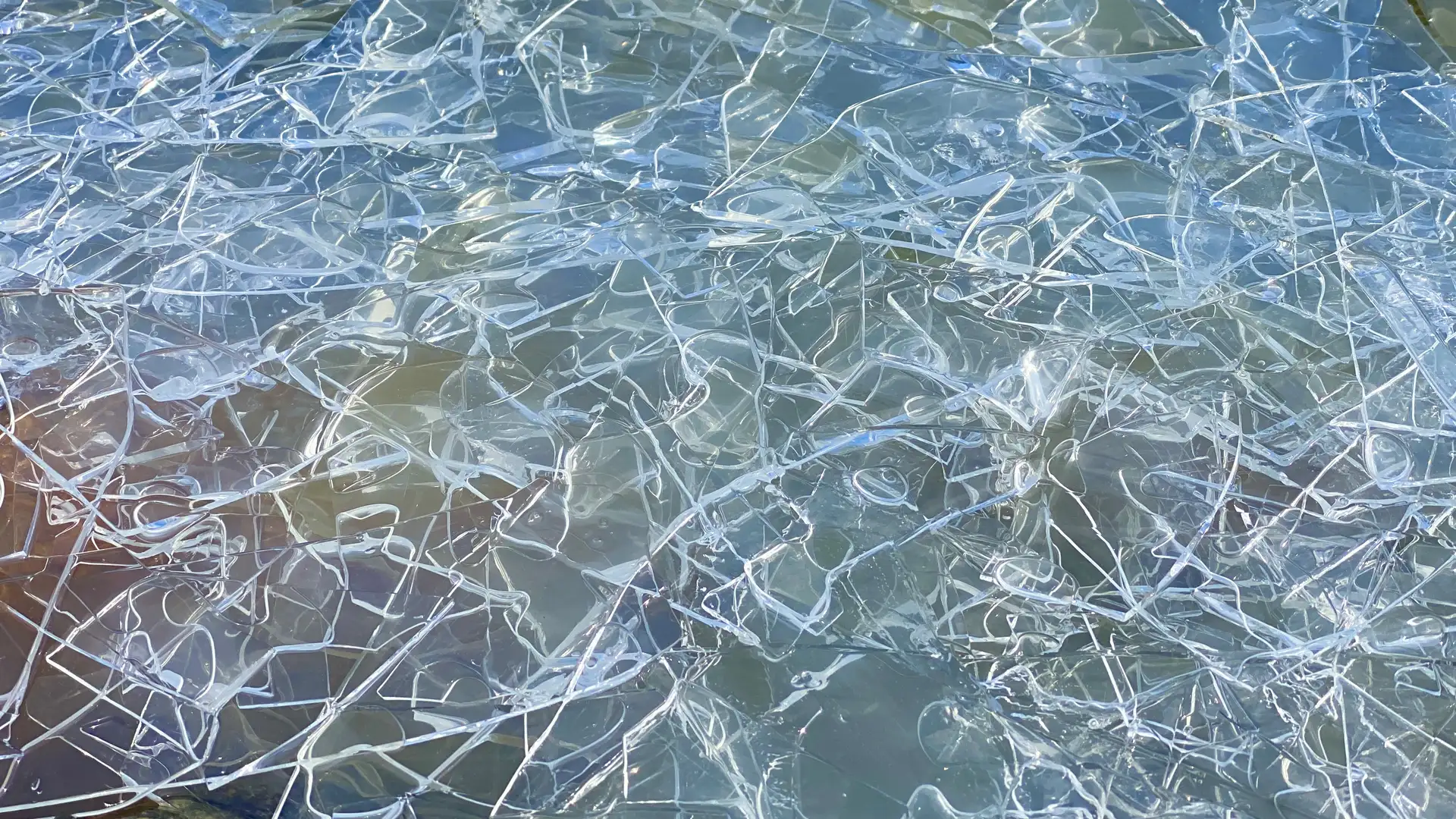
The lagoon itself is characterized as a body of water where glacial dynamics are evident. Icebergs and floating ice fragments on its surface are a constant element, the product of calving from the surrounding granite walls. The setting is defined by an imposing territorial scale, where the Cerro Torre massif dominates the horizon alongside other formations such as cerro Chaltén and the Adela range.
The ecosystem is composed of rugged relief that combines mountain forest vegetation with areas of bare rock. The interaction between the Fitz Roy river, which feeds the valley, and the granite structures creates a scene where glacial erosion is the principal agent shaping the landscape. This combination of natural elements defines an observation experience centered on the magnitude of Patagonian geological formations.