Parque Provincial Península de Magallanes
Parque Provincial Península de Magallanes is a key sector within the landscape of the province of Santa Cruz, located approximately 40 kilometres west of El Calafate. This area is defined by its strategic geographic position, extending across a zone bordered to the north and west by the waters of Lago Argentino. Its significance lies in forming part of an interconnected ecosystem where the hydrological dynamics of the Santa Cruz river basin — an Atlantic-draining watershed — shape many of its physical characteristics.
Setting and geography of the sector
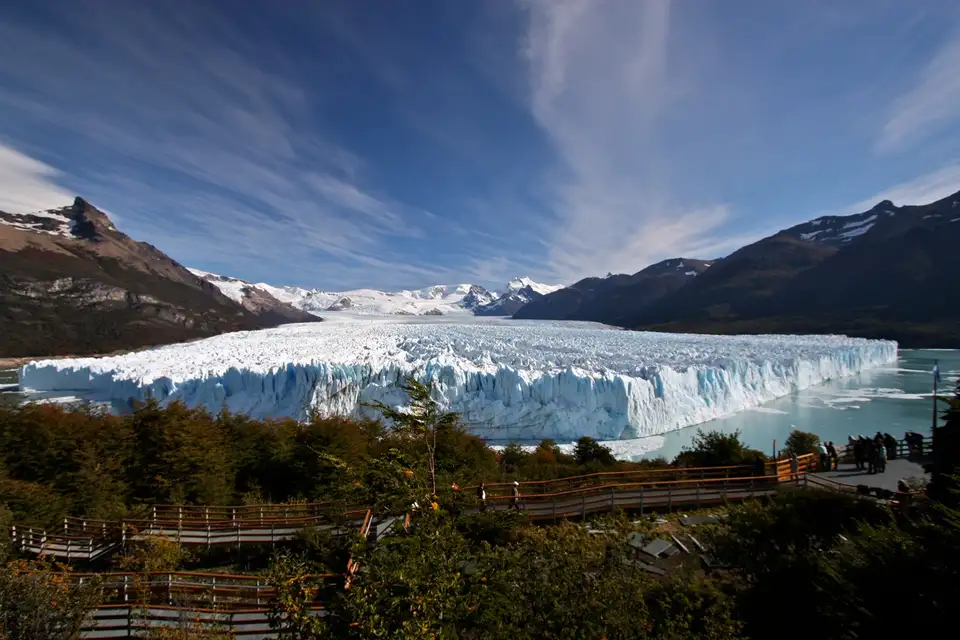
The park occupies a stretch of land that projects into Lago Argentino, close to areas of major glaciological importance such as the Perito Moreno Glacier. The terrain’s configuration is marked by the transition between the Patagonian steppe and zones under the direct influence of freshwater bodies. As part of the Santa Cruz river basin, the relief and soil composition reflect the geological processes that have shaped this peninsula opposite the ice masses.
The park’s territorial structure allows one to observe how the lake’s body of water interacts with the shoreline, creating a setting where the scale of natural features is predominant. The presence of this sector of the peninsula offers a different perspective on the local geography, moving away from the busier points of transit to focus on observing the natural dynamics of the Lago Argentino region.
Character of the landscape and route
A visit to this area unfolds in a wild natural setting, where the dominance of the steppe and the proximity of large bodies of water determine the conditions of the terrain. Travelling through the peninsula allows one to grasp the scale of the Atlantic basin and how the vegetation and relief adapt to the climatic exposure of the zone.
Along its trails, the visitor encounters a landscape that is not static but in constant relation with the changes of Lago Argentino. Observing the coastline and the extension of the peninsula toward the glacial waters offers a detailed view of the local biodiversity and geology, allowing one to appreciate the connection between dry land and the water system that sustains the region.